
The kusarifundō is a compact, versatile chain weapon consisting of two weighted ends joined by a short length of chain or rope. In the Bujinkan, this weapon plays a unique role, both as a striking tool and as a method of grappling, wrapping, and restraining. Though modest in appearance, it carries deep historical roots and continues to be taught in modern ninjutsu training.
Historical Roots: From Edo Castle to the Dojo
The kusarifundō is often credited to Masaki Toshimitsu Dannoshin (正木 俊光; February 11, 1690 – May 22, 1776), a palace guard stationed at Edo Castle. He believed that killing within palace grounds was sacrilegious, a disgrace that could tarnish the sanctity of the Shogun’s residence. Dannoshin sought a non-lethal method for apprehending intruders. He devised a two-foot chain with weighted ends, originally called the tamagusari, and later known as the manriki-gusari (“10,000 power chain”) and developed a system of techniques for disarming and subduing armed opponents without bloodshed. In Masaki-ryū, these terms refer to the same weapon, though other schools may have their own names and variations. His method evolved into Masaki-ryū, a system known for its ability to counter both armed and unarmed adversaries.
Earlier variations such as the konpi date back to 14th-century Japan, using rope and weights for similar control tactics. Masaki Ryū is the most historically documented school associated with the kusarifundō, having developed a comprehensive system for its use in restraining and subduing opponents. In modern times, Meifu Shinkage Ryū has refined the weapon’s striking applications under the name fundō kusari. Today, the kusarifundō is actively trained within the Bujinkan, where its techniques blend historical foundations with practical adaptations.
Weapon Description
The kusarifundō is a pretty simple weapon, consistenting of two parts:
- Chain (Kusari): Can vary in thickness, link shape (round, egg-shaped, etc.), and weight. The link closest to the fundo is often larger and thicker.
- Weights (Fundo): Often identical, they come in hexagonal, cylindrical, or rounded forms. Weight ranges from 2–4 ounces (56–112 grams).
There are several variations of the kusarifundō. Here are those that we train with at NTTV:
Traditional Kusarifundō: Two solid metal weights connected by a short chain, typically between 12–48 inches (30–120 cm) in length. The weights may be round, hexagonal, or rectangular, and usually weigh 2–4 ounces (56–112 grams) each. Some links at the ends are often thicker for durability.
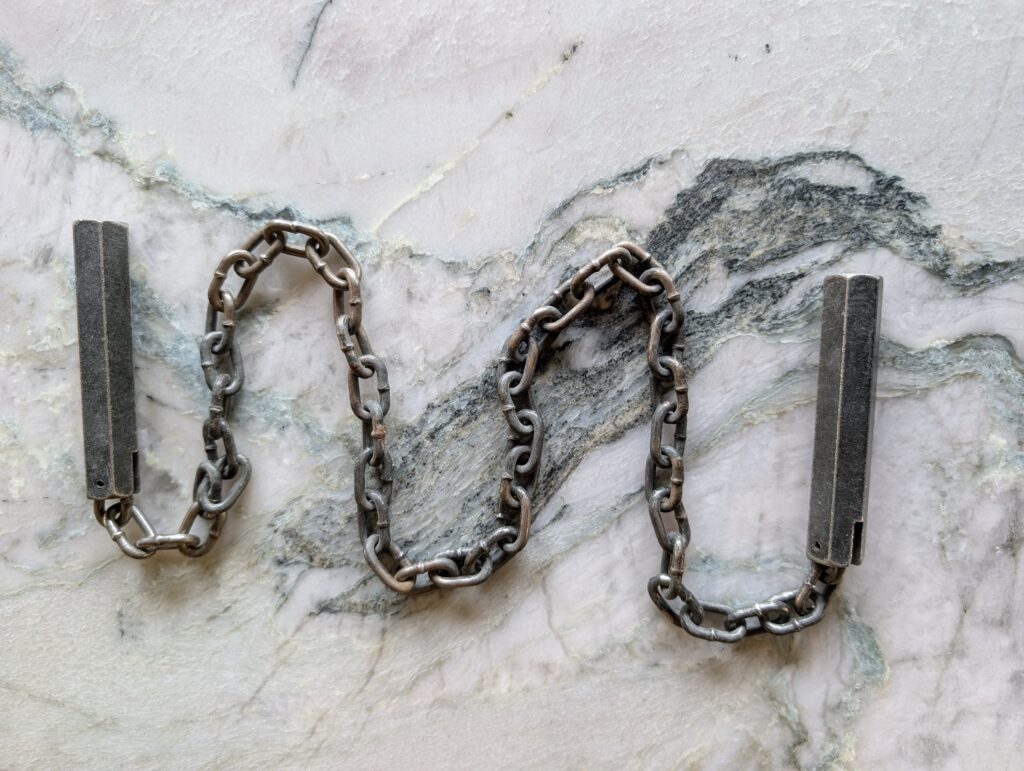
Fundo Kusari (Meifu Shinkage Ryū): A unique variation with a weight on one end and a metal ring or loop on the other. This version is optimized for precise strikes, not entangling or grappling.
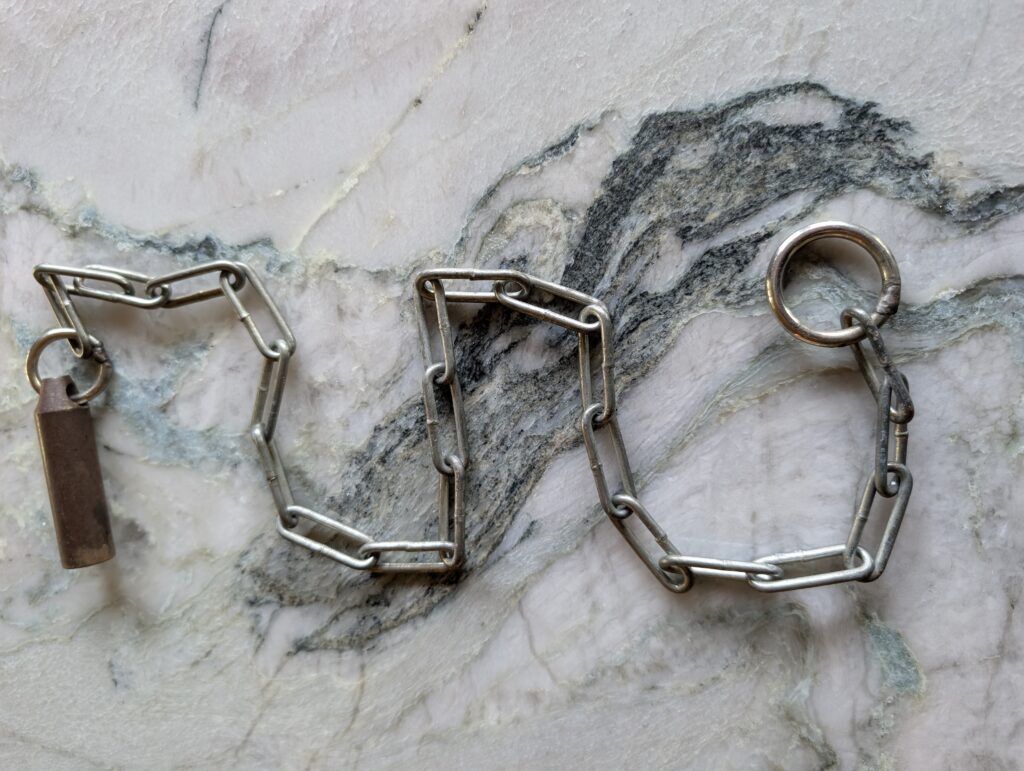
Training Kusarifundō: Often made of paracord or soft rope, with knotted or foam-padded ends. These are used in NTTV and Bujinkan training to minimize injury during high-speed drills or partner practice.
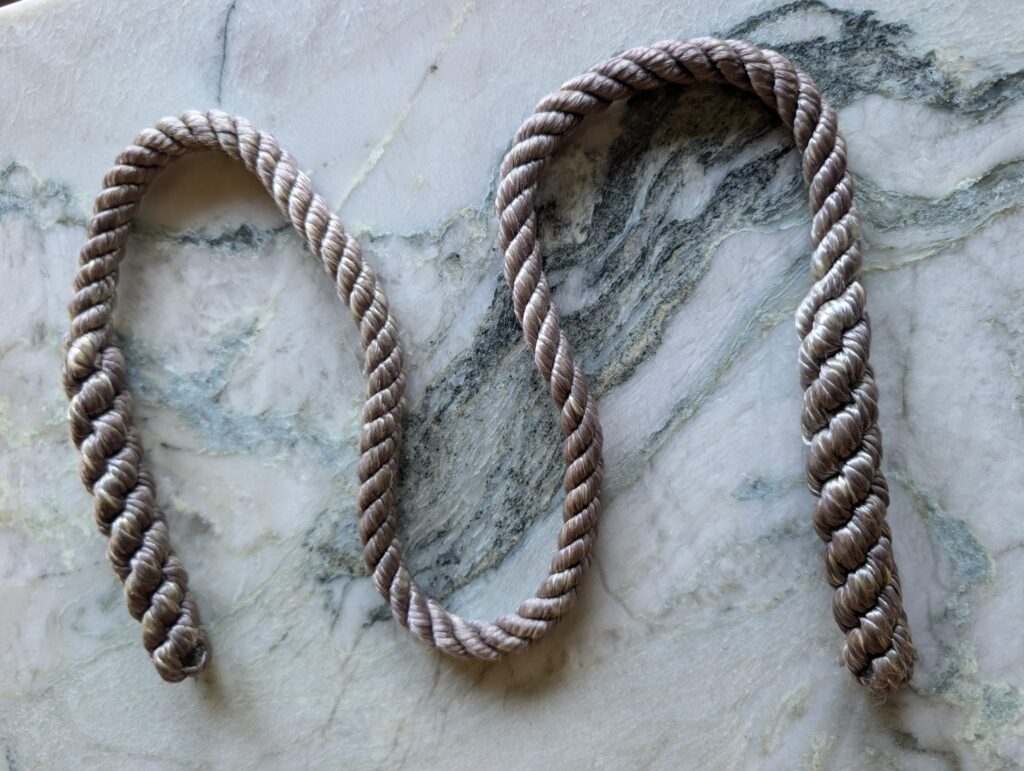
The chain material — whether metal or rope — significantly affects training style. Rope versions are safer and allow for smoother grappling, while metal chains provide more realistic momentum and weight.
🛠️ In a pinch, a kusarifundō can be improvised from rope, cord, or a belt with weighted ends.
Kusarifundō in NTTV Training
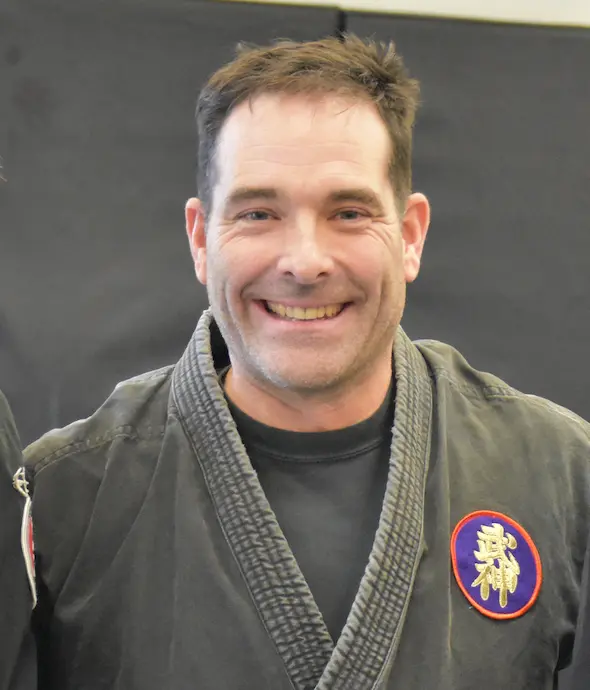
At NTTV, the kusarifundō makes its first formal appearance in the 4th Kyū curriculum, where students begin with basic strikes, safety handling, and posture (kamae). The goal at this stage is to develop familiarity with the momentum and reach of the chain, while building control and awareness. Rope trainers are emphasized at this level to prevent injury while learning how to control both ends of the weapon.
As students progress to Nidan, the kusarifundō becomes a featured weapon in more dynamic applications. At this level, students must demonstrate the ability to adapt the weapon in self-defense scenarios, particularly against grabs and punches. These advanced forms combine taijutsu (body movement) with the flexible weapon to create flowing transitions between striking, entangling, and throwing. Sensei Roemke’s training videos explore many of these transitions, emphasizing fluid movement and adaptability.
NTTV also has a stand-alone kusarifundō training video that breaks down key techniques, making it easy to follow and review at your own pace.
🟩 Advantages of the Kusarifundō
- Concealability: Easily hidden in the hand, pocket, or belt
- Versatility: Effective for striking, entangling, trapping, and joint manipulation
- Improvisation: Can be replicated with common materials (belt, cord, rope)
- Control without excessive harm: A well-trained practitioner can subdue an opponent without inflicting severe injury
- Speed and unpredictability: The flexible nature makes attacks difficult to track
🟥 Disadvantages of the Kusarifundō
- Risk to the user: A mishandled fundo can rebound and cause injury
- Learning curve: Requires significant coordination and timing to control effectively
- Limited lethality: In life-threatening situations, it may lack the stopping power of edged weapons
- Exposure during swings: The user can become vulnerable in the moment of extended motion
These pros and cons make it clear why the kusarifundō is a specialized weapon, powerful in trained hands, but not easy to master. As with all weapons in the Bujinkan, it reflects the principle of natural movement, evasion, and control over brute strength.
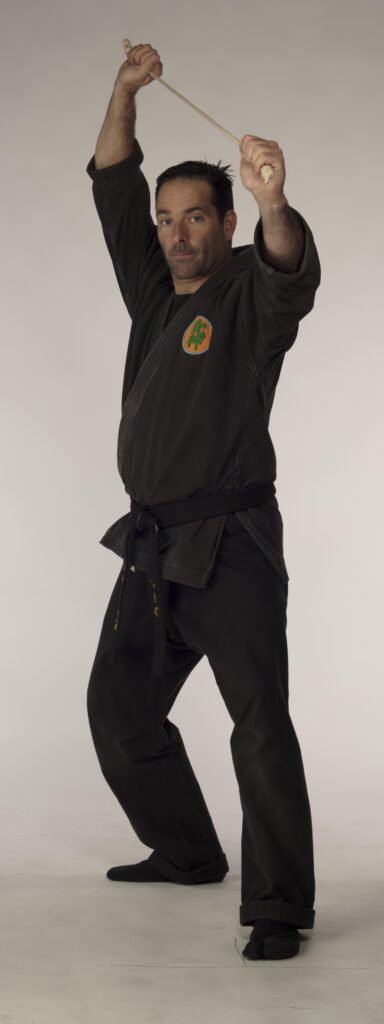
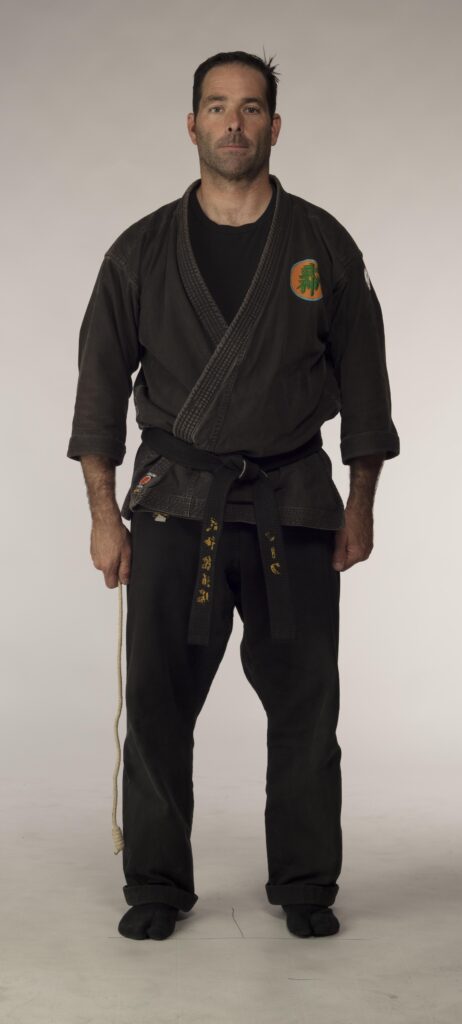
Kamae (Postures)
NTTV uses several kamae based on Masaki Ryū, demonstrated by Sensei Roemke. Each kamae represents a tactical mindset, not just a stance.
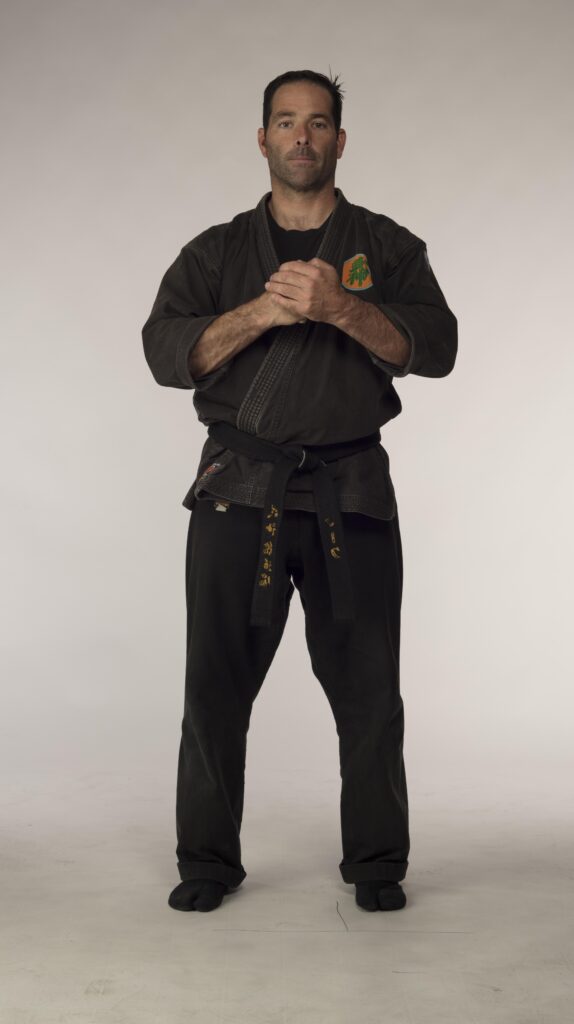
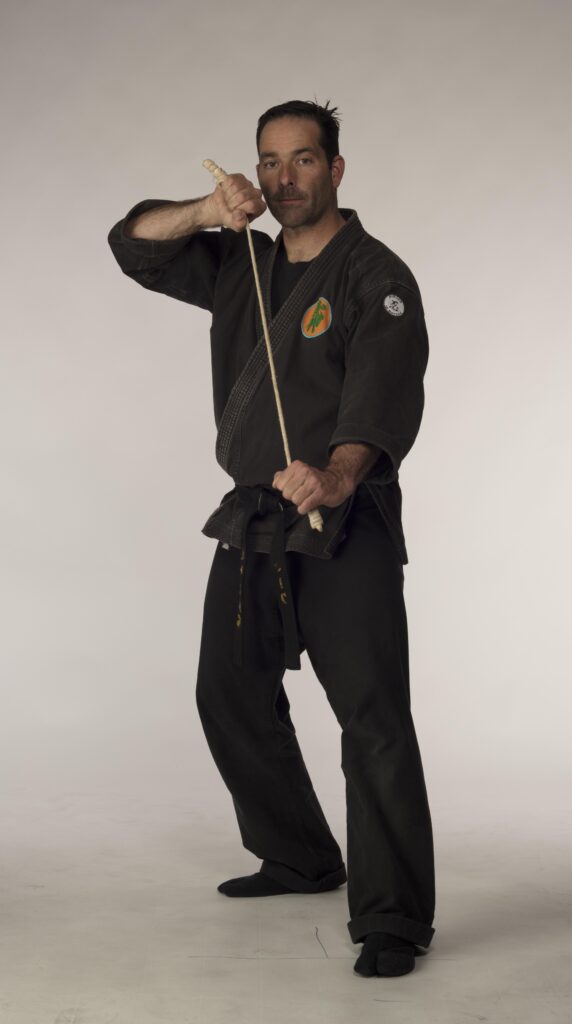
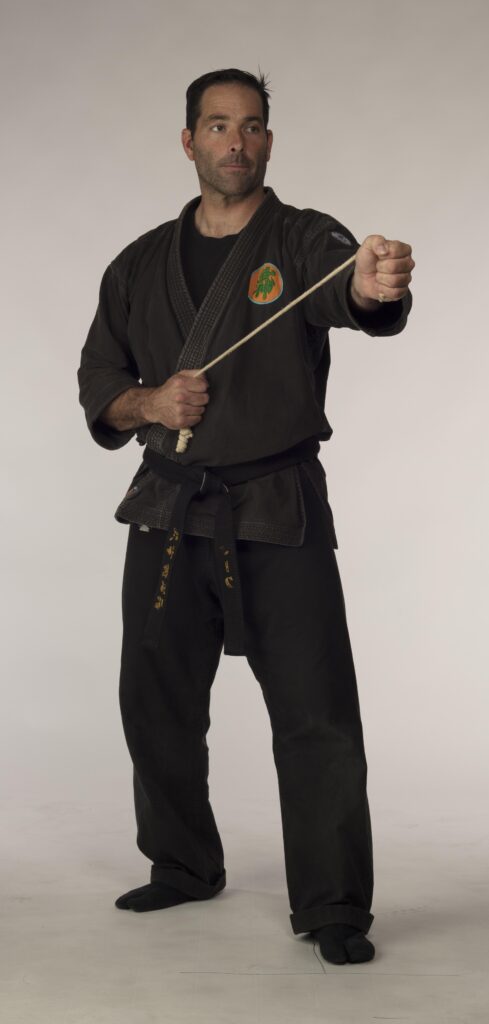

Grip (Te no Uchi)
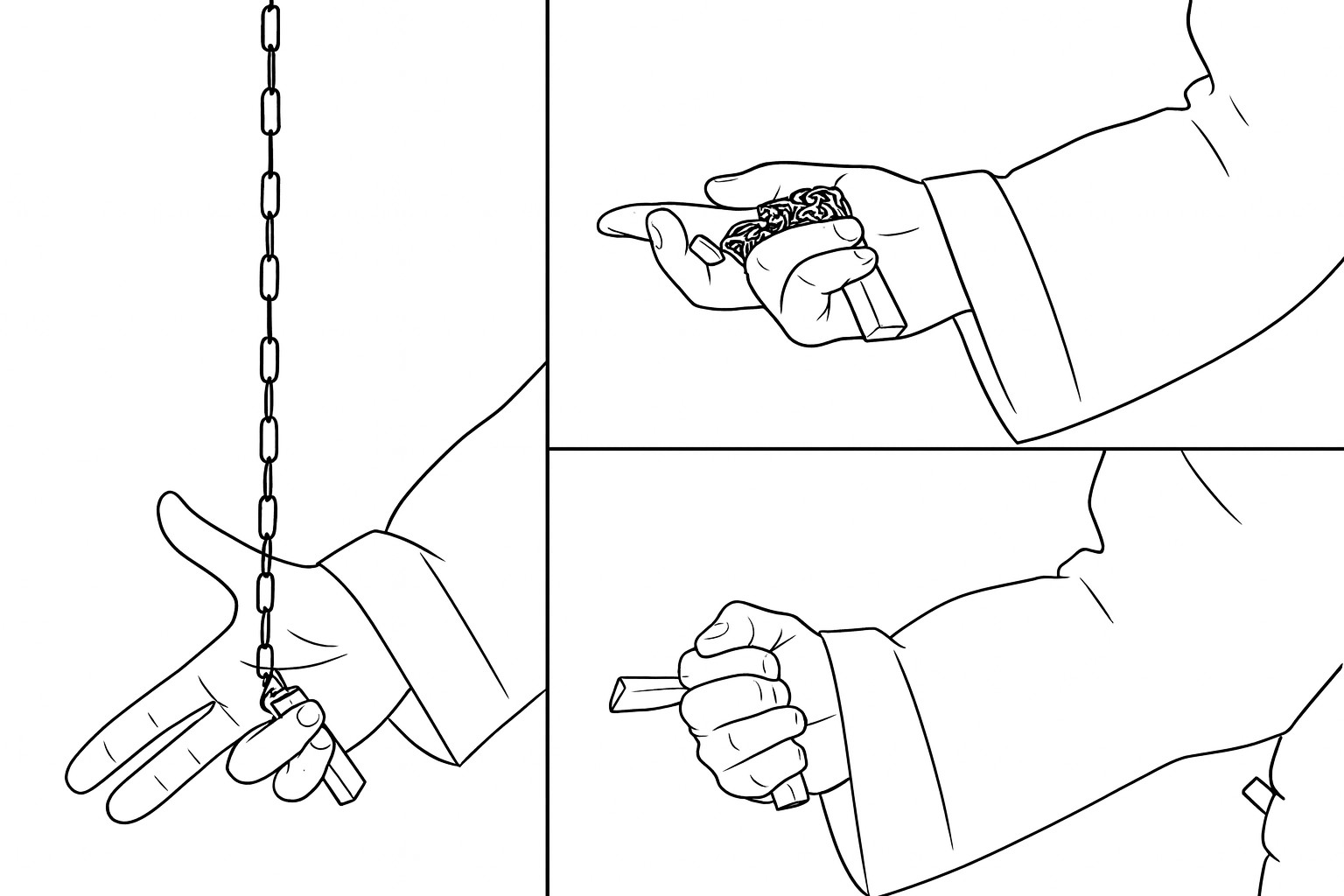
Proper grip ensures control and concealment. Here’s a breakdown:
- Hold the bottom weight with ring and pinky fingers with ~1 cm (about ½ inch) protruding
- Rest the chain in the palm, coiled or looped
- Thread the top weight between the index and middle fingers protruding like a bōshi ken
- This allows:
- Hammerfist strikes
- Punches using the weight like a knuckle weapon
Hikitori: The Art of Catching
From Meifu Shinkage Ryū, hikitori is the skill of safely catching the weight when it returns after a swing. Mishandling this can lead to injury, so train slowly and build coordination.
Closely related to this is osame, also from Meifu Shinkage Ryū. Since the kusarifundō is a hidden or surprise weapon, it must be concealed quickly after use. Osame refers to the practice of rapidly drawing the chain and weights back into the palm, coiling it in a natural, discreet grip. This prevents the enemy from seeing the weapon clearly, maintaining the element of surprise and controlling the escalation of force.
Basics: Striking & Grappling
The kusarifundō’s effectiveness lies in its versatility. It can shift seamlessly between striking at a distance and controlling an opponent up close. In training, both elements are emphasized.
Striking techniques, especially those drawn from Meifu Shinkage Ryū, offer speed and precision. Movements like metsubishi (targeting the face), yokomen uchi (a horizontal strike to the side of the head), and kesa uchi (a diagonal downstrike to the collarbone) teach range, targeting, and control. Reverse and variant angles, such as gyaku kesa uchi and hachinoji uchi (a figure-eight motion), give the practitioner multiple entry options during conflict.
The kusarifundō is more than just a striking weapon. In the Bujinkan, grappling applications are essential. A swung or looped chain can entangle an opponent’s wrist or ankle, create leverage for a throw, or wrap around the neck or torso for a momentary hold or choke. Techniques such as kubinage (neck throw) or joint locks assisted by the chain demonstrate how this flexible weapon integrates with taijutsu fundamentals.
Training both striking and grappling with the kusarifundō helps students learn timing, distance, and improvisation.
⚠️ Train slowly, with rope trainers, and under supervision when practicing wrapping or throwing techniques.
Final Thoughts
The kusarifundō blends striking, grappling, and stealth into one compact tool. Whether you’re working on basic kamae, refining your grip transitions, or executing advanced throws, the kusarifundō challenges you to remain adaptable, precise, and calm under pressure.
Its origins in law enforcement, paired with modern taijutsu applications, make it both a relic of the past and a relevant tool for today’s martial artist. With continued training, you’ll discover that the true power of the kusarifundō lies not in the chain but in your timing, awareness, and intent.
🎁 Holiday Gear Tip — Shinobi Gear Discount!

Looking to train with a quality kusarifundō or rope trainer?
🛍️ Visit ShinobiGear.com and use code NTTV for a discount off all gear — including kusarifundōs — during this holiday season only!